

Lollipop machine maintenance takes a few minutes a day and saves hours of downtime. A lollipop forming machine works hard. It runs hot, sticky candy through moving dies for hours at a time, and small problems turn into a stopped line if nobody checks.
- Clean dies while the candy is still soft
- Lubricate and tighten weekly, inspect gears monthly
- Keep a log so you know when to order spares
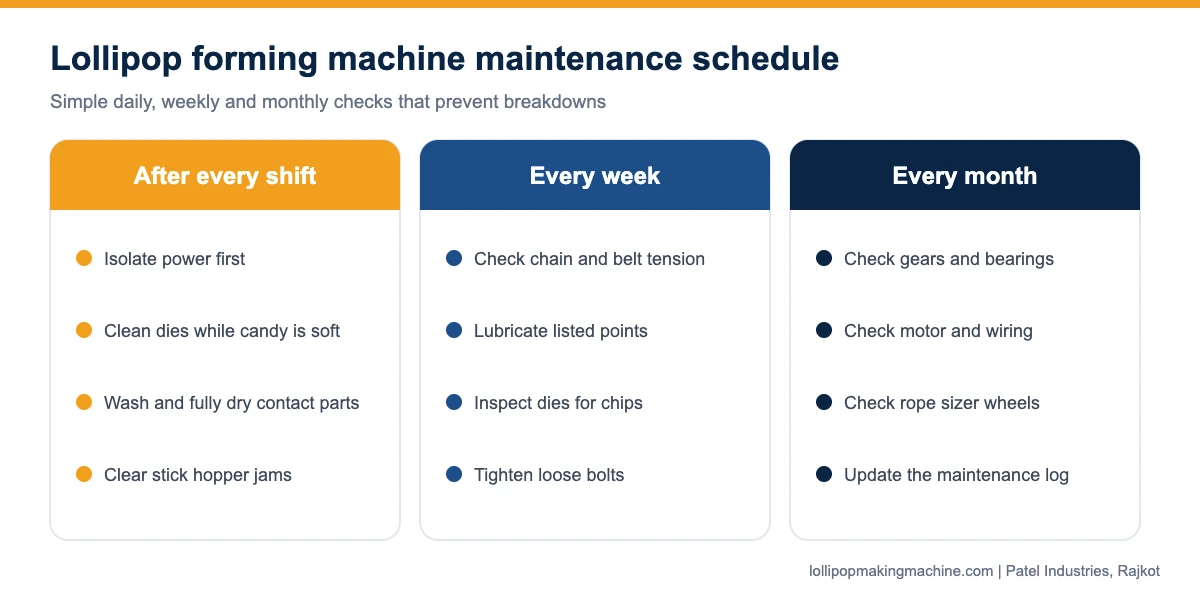
Daily lollipop machine maintenance: after every shift
- Switch off and isolate the power before touching the forming head.
- Remove candy build-up from the dies, guides and stick feeder while it is still soft. Hardened candy is much harder to clean and can scratch the die surface.
- Wipe food-contact parts with warm water and dry them fully. Moisture left on the dies makes the next batch sticky.
- Check the stick hopper for broken sticks and clear any jams.
Every week
- Check chains and belts for tension and wear.
- Lubricate the points the maker lists, using food-safe lubricant where parts are near the product.
- Look at the dies under good light. Chips or worn edges show up as uneven lollipops or flash around the ball.
- Tighten loose bolts. Vibration at speed loosens them over time.
Every month
- Inspect gears and bearings for noise or play.
- Check the motor and electrical connections. Ask an electrician to check the panel if anything looks heat-damaged.
- Check the rope sizer wheels too. A worn sizer gives an uneven rope, and the former gets blamed for it.
Looking after the dies
Lollipop forming dies are precision parts. Store spare sets clean, dry and oiled, in a box where they can’t knock together. Never use a hammer or screwdriver to remove stuck candy. Soak it off with warm water instead.
Keep a log
Write down each cleaning, lubrication and part change with the date. When a problem appears, the log shows what changed. It also tells you when to order spares before you run out. A printed checklist next to the machine works well: the operator ticks each task at the end of the shift, and the supervisor checks it weekly. Over a few months the log shows which parts wear fastest on your line, so you can plan stock and downtime instead of reacting to breakdowns.
When to call the maker
Call your supplier if the machine makes a new noise, the lollipop weight drifts and adjustment doesn’t fix it, or a die is damaged. Running a damaged machine usually costs more than the repair.
Signs the machine needs attention
- Lollipop weight starts to drift and adjusting the rope does not fix it.
- Sticks go in at an angle or fall out.
- You hear a new knocking, grinding or squealing sound.
- Flash or rough edges appear around the lollipops.
- The motor runs hotter than usual or trips the supply.
Stop and check the machine when you see any of these. Small fixes made early cost far less than a broken gear or a damaged die set.
Use only lubricants rated for incidental food contact near the product. The NSF registers lubricants that meet this standard.
Lollipop machine maintenance: FAQ
How often should lollipop machine maintenance be done?
Clean after every shift, lubricate and check tension weekly, and inspect gears, bearings and wiring monthly.
Can I clean lollipop dies with a metal tool?
No. Metal tools scratch the die surface. Soak hardened candy off with warm water instead.
What spare parts should I keep for lollipop machine maintenance?
Keep a spare die set for your main lollipop size, plus the wear parts your supplier lists for the stick feeder and drive.
Need spare dies or parts for a Patel Industries machine? WhatsApp +91 99259 91005 with the machine name and a photo.
Planning a lollipop line?
Tell us your lollipop size and target output. We will suggest the right machines.
Get a Quote on WhatsApp